

Most cyclists spend weeks researching their next frame or wheelset, then throw together the rest of their kit as an afterthought. That's backwards. The bike gets you moving, but it's the gear around it that keeps you safe on a wet descent, gets your ride to the trailhead in one piece, and makes sure everything still runs smoothly six months from now.
Whether you're building out a road setup or dialing in a commuter rig, here are the four categories of cycling gear that actually matter — with real products that show you what to look for in each one.
1. Head Protection That Doesn't Sacrifice Airflow
The temptation is to grab the cheapest helmet that fits the safety checkbox and move on. Don't. A helmet you're comfortable wearing — one that's light, well-ventilated, and sits right on your head — is one you'll actually keep on. A stuffy, heavy lid that you're constantly adjusting mid-ride is a distraction you don't need.
The IRH Medalist Helmet in Black Velveteen is a strong example of what a well-designed riding helmet looks like. Its low-profile geometry keeps the silhouette trim while the top and rear air vents pull cooling airflow through the shell — a combination that matters on long summer rides. The rich velveteen finish and elegant three-point harness give it a polished look that works equally well in the arena or on the trail. It's the kind of helmet that doesn't feel like a compromise.
2. Brakes That Work When the Road Doesn't Cooperate
Rim brakes are fine — until they're not. Wet roads, long descents, a sudden stop in traffic: these are the moments when rim brakes tend to go soft or fade, and those are exactly the moments when you need everything your brakes have to give.
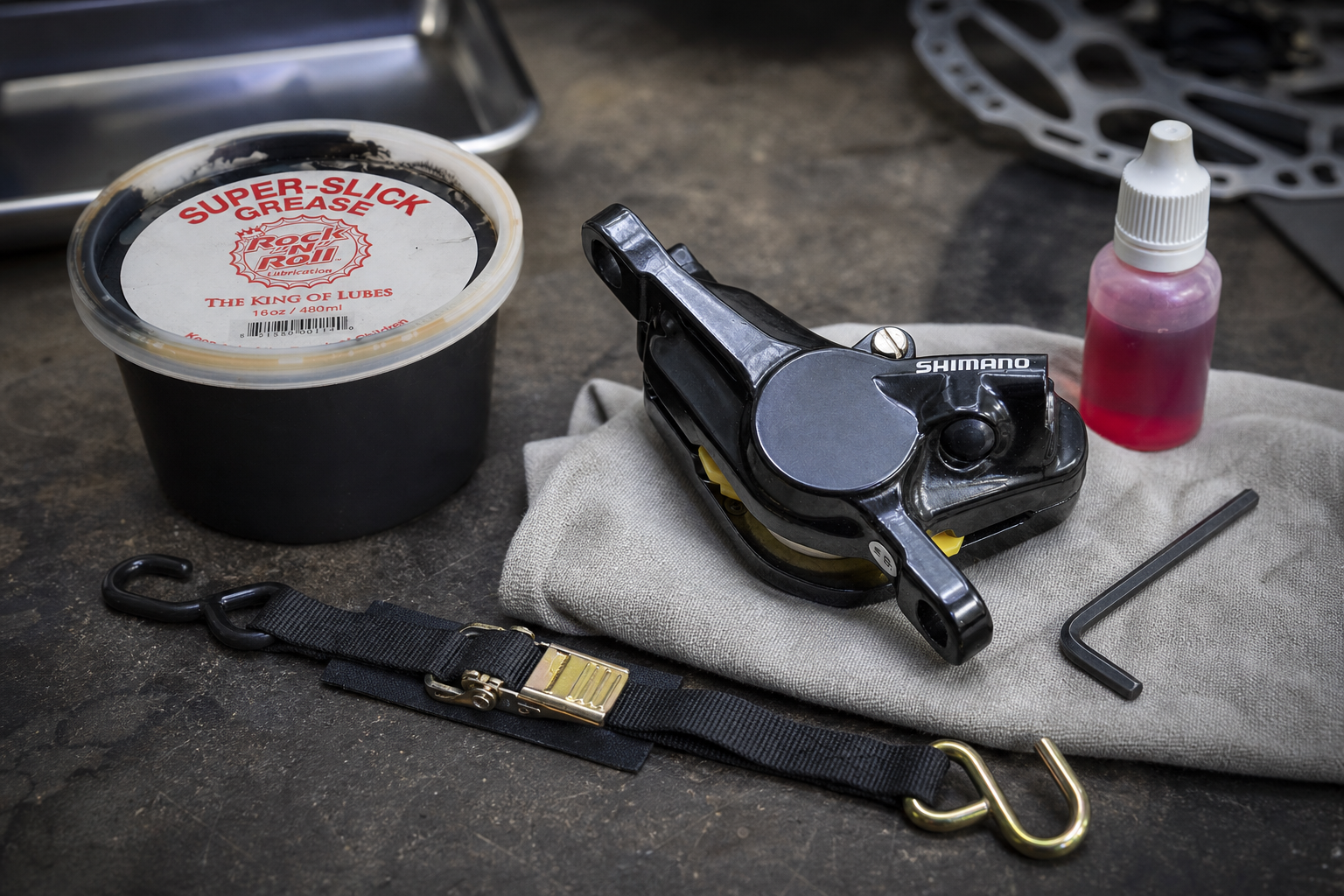
Hydraulic disc brakes solve this. The Shimano BR-RS785 Hydraulic Disc Brake Caliper is built around consistent, all-condition stopping power. It pairs with Shimano's ST-RS685 11-speed components and features IceTech cooling fins that dissipate heat during long, steep descents — so your braking response stays sharp even when the mountain doesn't let up. Front or rear fitment, resin pads with fins included. This is the kind of upgrade that changes how confident you feel on the bike, not just how fast you stop.
3. Drivetrain Maintenance: The Unglamorous Thing That Keeps Everything Running
Here's the honest truth about bike maintenance: most mechanical problems aren't dramatic failures. They're slow-building neglect. A dry, gritty fork. A bearing that starts to feel rough. Components that were never properly greased during assembly. The fix is rarely expensive — it just requires the right lubricant and a habit of actually using it.
Rock 'N' Roll Lubrication Super Slick Grease is a thin, stay-put grease that works particularly well for fork overhauls — it spreads cleanly, doesn't migrate where you don't want it, and holds its position once applied. The 16 oz tub means you're not rationing it. Use it properly during a service and you'll feel the difference in how smoothly everything moves. It's the kind of product that sits in a good mechanic's toolkit for a reason.
4. Transporting Your Bike Without Trashing It
Getting your bike to the trailhead, the race start, or a friend's house sounds simple. It's not. An unsecured bike on a trailer or truck bed shifts, bounces, and takes paint-scratching hits the whole way there. You show up to ride and spend the first twenty minutes checking for damage.
The BoatBuckle Kwik-Lok Transom Tie-Down is designed for exactly this kind of load-securing job. The 1-inch polypropylene webbing extends to 4 feet, the vinyl-coated top hooks protect contact points, and the zinc-coated trailer hooks are built to handle real loads — with a 1,200-pound breaking strength and a 400-pound safe working load. That's not overkill; that's knowing your gear will stay exactly where you put it, no matter how rough the road gets.
5. The Mindset: A Kit Is a System, Not a Checklist
This is the part most gear guides skip. Each of these products solves a specific problem — head protection, reliable braking, drivetrain longevity, secure transport — but they work best when you think of them together. A rider with a great helmet and no maintenance routine will eventually be riding a bike that feels worse every month. A rider with a perfectly serviced drivetrain and no tie-down discipline will show up to rides with a dinged-up frame.
Building a serious kit means filling in the gaps, not just buying the flashiest parts. Start with what you're missing. Fix the weak link first.
Browse the full cycling accessories collection at OnlineSportsMall — free US shipping on orders over $75, and every product is 100% authentic. New customers can use code WELCOME5 for 5% off their first order.
Frequently Asked Questions
What's the difference between hydraulic and mechanical disc brakes for road cycling?
Hydraulic disc brakes use fluid pressure to actuate the caliper, which gives more consistent modulation and power — especially in wet conditions or during long descents where heat builds up. Mechanical disc brakes use a cable, which is simpler to service but can feel less progressive and may require more hand force to achieve the same stopping power. For riders who frequently ride in mixed conditions or hilly terrain, hydraulic systems like the Shimano BR-RS785 are generally the more reliable choice.
How often should I grease my bike's fork and bearings?
There's no single universal interval — it depends on how often you ride, in what conditions, and what type of fork you have. A good rule of thumb is to inspect and re-grease threaded areas, headset bearings, and suspension components at least once a season, or sooner if you notice any stiffness, creaking, or rough movement. Riding in wet or muddy conditions accelerates wear, so check more frequently if that's your typical terrain.
Are velveteen riding helmets suitable for trail or mountain riding, or only arena use?
Velveteen helmets like the IRH Medalist are primarily associated with English-discipline equestrian riding, but the underlying shell and ventilation design determine real-world protection and comfort. Always check that any helmet meets the safety certification required for your specific discipline and riding environment. If you're doing technical trail riding, look for helmets specifically rated and designed for that use case.
What should I look for in a tie-down strap for transporting a bike or sports gear?
Focus on three things: working load rating (how much force the strap can safely hold in use), the hook type (coated hooks protect your gear's finish better than bare metal), and webbing width (wider webbing distributes load more evenly and is less likely to cut into soft surfaces). For most recreational transport needs, a strap with a clearly stated safe working load, protective hook coatings, and sturdy cam-buckle hardware — like the BoatBuckle Kwik-Lok — covers the basics reliably.