

The Gear That Doesn't Survive the Pool
You've packed your bag in a hurry, realized you forgot your swimsuit, and thought: my compression shorts will do. Or maybe you swim open-water occasionally and wonder whether your running tights are close enough to a wetsuit liner. It's a reasonable question — athletic wear and swimwear look similar on the rack. The difference shows up fast once you're in the water.
Standard activewear is built for sweat. Swimwear is built for submersion. Those are two very different engineering problems, and the fabrics that solve one tend to fail badly at the other.
What Happens to Athletic Fabrics in Water
Most athletic tops, leggings, and shorts are made from polyester-spandex or nylon-spandex blends. Dry, they wick moisture away from your skin and stretch with your movement. Submerge them in a chlorinated pool, though, and a few things happen quickly.
They absorb and hold water. Standard activewear isn't designed to repel water — it's designed to pull sweat away from skin and let it evaporate. In a pool, that same absorption works against you. The fabric gets heavy, drags, and clings in ways that slow you down and feel genuinely uncomfortable mid-lap.
Chlorine degrades the elastane. Chlorine attacks the elastic fibers that give activewear its stretch. After even a handful of pool sessions, you'll notice the waistband loosening, the fabric going limp, and the overall shape of the garment deteriorating. This isn't a quality issue — it happens to perfectly good athletic gear because it was never meant to handle pool chemistry.
Colors fade faster than you'd expect. The dyes used in athletic apparel aren't formulated to resist chlorine exposure. A few swims and that deep navy or bold red can start looking washed out in a way that a full season of sweaty workouts wouldn't cause.
The cut works against you in water. Loose shorts billow. Wide-leg openings catch water resistance. Even fitted compression gear, when waterlogged, doesn't move the way purpose-built swimwear does. If you're actually trying to swim — not just wade — the drag is real.
The One Exception: Some Fabrics Manage Okay
Not everything falls apart immediately. Tight-fitting, high-nylon-content athletic wear — the kind used in triathlon or open-water training — holds up better than a baggy cotton-poly tee or a loose mesh basketball short. Nylon is naturally more chlorine-resistant than polyester, and a snug cut reduces drag enough that occasional pool use won't destroy it in one session.
But "manages okay" is a low bar. You're still shortening the garment's life, and you're still not getting the performance that actual swimwear delivers. For a one-time emergency? Fine. As a regular habit? You'll burn through gear faster than you should and never feel right in the water.
What Purpose-Built Water Apparel Actually Does Differently
Swimwear and water-sport apparel solve the problems above at the fabric level, not just the cut level.
Chlorine-resistant fabric blends — typically a higher proportion of polyester or PBT (polybutylene terephthalate) — are engineered specifically to resist the chemical breakdown that destroys standard elastane. A good competitive swimsuit can handle far more pool hours than any athletic legging before losing its shape.
Minimal water absorption means the fabric doesn't get heavy. It sheds water rather than holding it, so you're not dragging extra weight through every stroke.
Compressive, hydrodynamic cuts are shaped for the body in motion through water — flat seams, streamlined profiles, and leg openings that don't catch resistance. Triathlon suits take this further, designed to go from swim to bike to run without changing.
UV protection matters for open-water and outdoor swimming. Many rash guards and water-sport tops carry a UPF rating that standard athletic shirts simply don't offer.
For open-water swimmers, paddlers, surfers, and anyone spending serious time in the water, water-ready athletic apparel in the right category is the difference between gear that lasts a season and gear you're replacing after six weeks.
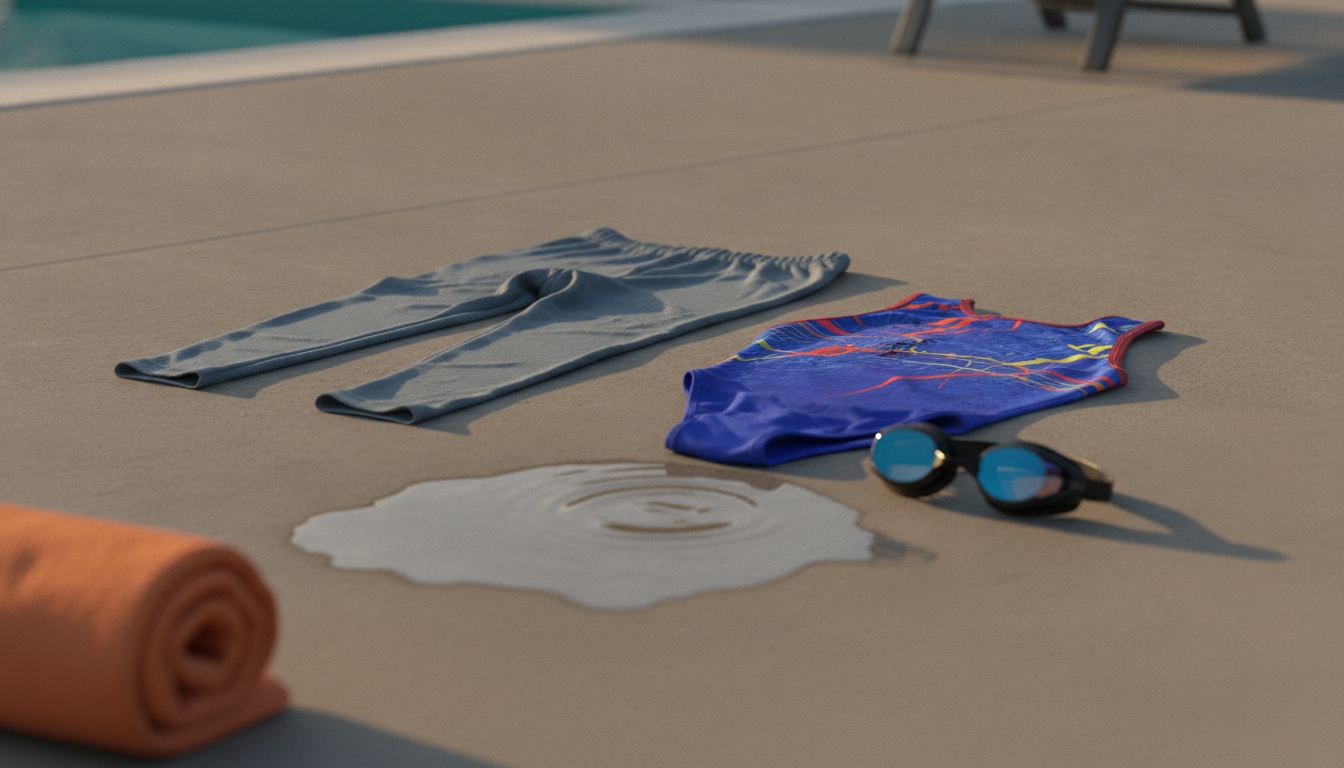
A Practical Guide: What to Reach For
Here's a straightforward way to think about it based on what you're actually doing:
- Lap swimming (pool): A proper competitive or recreational swimsuit. No exceptions if you're doing this regularly. The chlorine will win every time against standard activewear.
- Open-water swimming: A wetsuit or triathlon suit for colder water; a rash guard and swim shorts or a one-piece for warmer conditions. The UPF coverage matters here too.
- Paddleboarding, kayaking, surfing: A rash guard paired with board shorts or a surf suit. These are designed to handle salt water, sun, and repeated soaking without degrading.
- Triathlon or swim-to-run training: A triathlon suit — built to go from water to pavement without needing a change. Tight, fast-drying, and durable enough for both environments.
- Casual beach or lake day: Honestly, this is where your athletic shorts are most forgivable — occasional fresh-water exposure won't destroy them. But rinse them out afterward and don't make it a habit.
Protect the Gear You Already Have
If you do end up using athletic wear in the water — it happens — a few habits extend its life significantly. Rinse immediately in cold fresh water after pool exposure. Never leave chlorine-soaked gear sitting in a bag. Wash it promptly on a gentle cycle and air dry rather than machine drying. None of this undoes the chlorine damage entirely, but it slows the deterioration.
And if you're regularly training in or around water, it's worth investing in the right category of gear from the start. Buying the correct thing once is almost always cheaper than replacing the wrong thing repeatedly.
Browse water-ready athletic apparel and swimwear at OnlineSportsMall — 500+ brands, 100% authentic gear, and free US shipping on orders over $75. First-time shopper? Use code WELCOME5 for 5% off your first order.
Frequently Asked Questions
Will wearing athletic shorts in a pool ruin them after one swim?
One session probably won't destroy them, but the damage starts immediately. Chlorine begins breaking down elastane fibers on first contact, and the effect is cumulative. The more pool sessions you put them through, the faster the stretch, shape, and color deteriorate. Rinse thoroughly in cold fresh water right after and wash promptly to slow the process.
Is nylon activewear more pool-safe than polyester?
Nylon is naturally more resistant to chlorine than polyester, so it holds up somewhat better over time. That said, neither is a substitute for purpose-built swimwear, which uses chlorine-resistant fabric constructions specifically engineered for pool use. If you're swimming regularly, the right swimwear will outlast any activewear in a pool environment by a significant margin.
Can I use a rash guard instead of a swimsuit?
A rash guard is designed for water exposure — it handles chlorine and salt water far better than standard athletic tops and provides UPF sun protection for outdoor swimming. For lap swimming, you'd typically pair it with a swimsuit bottom rather than use it alone. For open-water, surfing, or paddling, a rash guard is exactly the right tool for the top half of your body.
What's the difference between a triathlon suit and a regular swimsuit?
A triathlon suit is built to perform across all three legs of a race without changing clothes. It's designed to be fast in the water like a swimsuit, comfortable enough to cycle in without excessive padding, and breathable enough to run in as it dries. A standard competitive swimsuit is optimized purely for swimming performance and isn't designed for the bike or run portions. If you're doing multi-sport training, a triathlon suit is worth the investment.