

The first thing most new athletes do when they pick up a sport is Google a full equipment list and buy almost all of it. Two months later, half of it is still in the box. The batting gloves are pristine. The compression arm sleeves were worn once. And the shoes that cost the most are somehow the ones that don't fit the sport the way you expected.
It's not a money problem — it's a sequencing problem. You bought gear for the athlete you imagined becoming before you knew what the sport actually demands of your body and your schedule.
This guide breaks down three different sports — basketball, baseball, and gym-based fitness training — and shows you exactly what belongs in a starter kit versus what can wait until you know you're serious. The goal isn't to go cheap. It's to go smart.
The Rule Before the Checklists
Every sport has three layers of gear: essentials (you can't play safely or effectively without these), upgrades (things that genuinely improve performance once you've got the basics dialed in), and nice-to-haves (gear that pros use, beginners buy, and intermediate athletes quietly sell on eBay).
Your starter kit should be almost entirely essentials, with one or two upgrades if the sport demands it early. Everything else waits.
Basketball: What You Actually Need to Run With
Basketball is one of the most accessible sports to start — courts are everywhere, pickup games are free, and the barrier to entry is low. Which is exactly why it's easy to over-buy before your first game.
Start with these
- Basketball shoes — This is the one place to invest early. Court shoes are built for lateral cuts and quick stops on hardwood or concrete. Running shoes aren't, and playing in them is how you roll an ankle. Fit matters more than brand here — find a pair that locks your heel in and gives you ankle support. Browse basketball shoes to find a pair built for the court.
- Basketball shorts — Loose enough to move freely, long enough to stay out of your way. That's it. You don't need compression underneath on day one. Basketball shorts come in a wide range of fits and lengths — pick what feels comfortable on the court.
- A basketball — If you're playing in a gym, they'll usually have one. If you want to practice at home or on an outdoor court, get a ball rated for the surface you're playing on (indoor/outdoor composite balls work for both).
- Moisture-wicking top — Basketball generates a lot of heat fast. A breathable athletic top is non-negotiable. Cotton holds sweat; performance fabric moves it away.
What can wait
Ankle braces (unless you have a history of sprains), compression tights, shooting sleeves, and basketball-specific socks are all things you can add once you're playing regularly. A basketball accessories haul on day one is the classic over-buy. The sleeve doesn't improve your shot. Reps do.
Baseball: The Sport Where Gear Stacks Up Fast
Baseball has one of the steeper equipment curves of any team sport. There's a lot of gear, some of it is position-specific, and league rules often dictate what's required anyway. If you're just starting out — whether it's a recreational adult league or getting back into it after years away — keep the list tight.
Start with these
- Glove — Your glove is the most personal piece of baseball equipment you'll own. Get one that fits your hand, is appropriate for your position (outfield gloves are larger; infield gloves are shorter for quick transfers), and is broken in or break-in-able. A stiff, unbroken glove is a liability. Check out baseball gloves and read the sizing guidance before you buy.
- Cleats — Metal cleats are often restricted in recreational leagues; molded rubber cleats are the safe starting choice. They work on most surfaces and won't get you benched for equipment violations.
- Batting helmet — Non-negotiable for any organized play. Check your league's certification requirements before buying — most adult leagues require a specific safety rating.
- Athletic cup (for fielders and hitters) — Skipped by beginners, regretted immediately. Don't skip it.
- Baseball cap — Sun in the outfield is a real problem. A baseball hat is functional gear, not just a uniform piece.
What can wait
A personal bat is the biggest purchase most new players make too early. Your league or team will often have bats available, and bat preference is something you develop over time — length, weight, drop ratio. Buy one after you've swung enough to know what you like. Batting gloves, sliding shorts, and catcher's gear (unless you're catching) are all secondary. The baseball and softball category is deep — use it as a reference, not a shopping cart to fill all at once.
Gym-Based Fitness Training: The Most Over-Bought Category in Sports
The fitness equipment market is built on the anxiety of not having the right thing. Resistance bands, foam rollers, lifting belts, wrist wraps, knee sleeves, chalk, lifting straps — you can spend a lot of money before you've done a single workout.
Here's the honest version of what a beginner actually needs for gym-based training, whether that's weightlifting, functional fitness, or general strength work.
Start with these
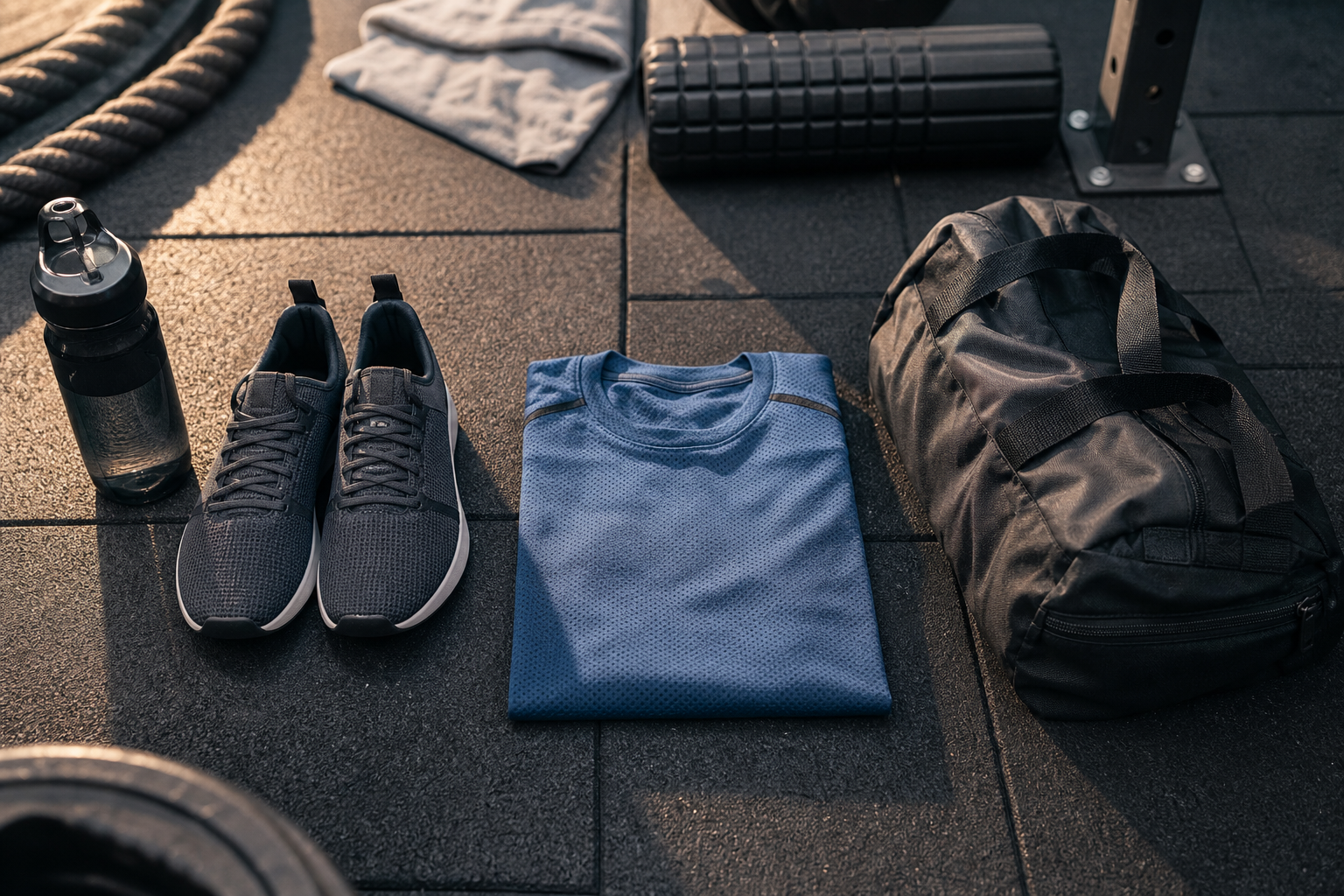
- Training shoes — Running shoes have cushioned, unstable soles designed for forward motion — the opposite of what you want when squatting or lifting. A flat-soled training shoe gives you a stable base. This is the single most impactful equipment decision a new lifter can make.
- Athletic shorts or leggings — Full range of motion matters. Jeans are a joke. Beyond that, wear what's comfortable. The apparel options cover everything from compression fits to relaxed training cuts.
- A water bottle — Hydration isn't optional. It affects your performance within the first hour of training more than almost any supplement will.
- A gym bag — You need somewhere to put your stuff. A simple bag or pack that fits your shoes, a change of clothes, and your water bottle is enough.
What can wait
Lifting belts are for experienced lifters moving heavy loads — not beginners who need to build core strength first. Wrist wraps, knee sleeves, and chalk are the same story. Resistance bands are useful but not urgent. A foam roller is worth having once you're training consistently enough to feel the need for it — if you're curious about recovery tools, this post on evaluating athletic recovery tools cuts through a lot of the noise.
The Gear That Crosses Every Sport
A few things belong in almost every starter kit regardless of sport:
- Sport-appropriate footwear — The single most consistent mistake beginners make is wearing the wrong shoes. Every sport puts different demands on your feet and ankles. Match the shoe to the surface and the movement pattern.
- Moisture-wicking base layers — Cotton is the enemy of comfort during training. A good athletic top and shorts or leggings in performance fabric will serve you across every sport you try.
- A bag to carry it all — Simple, but the athlete who shows up organized trains better.
Nutrition is the other universal — what you eat before and after training affects how quickly you adapt to a new sport. If you want to understand that side of things, the post on effective sports nutrition strategies is worth a read once you're past the gear decisions.
One More Thing: Buy Real Gear Once
The temptation when starting out is to buy the cheapest version of everything to "test" whether you'll stick with the sport. The problem is that cheap gear often performs badly enough to make the sport feel harder than it is — and then you blame the sport instead of the equipment. A glove that won't close, shoes that slip, or shorts that chafe mid-game all make quitting easier.
The smarter move: buy fewer things, but buy real versions of them. Authentic gear from real brands performs the way it's supposed to. That's a better test of whether you like the sport than struggling through it with gear that's fighting you.
Find everything on your checklist in one place — shop sport-specific gear at OnlineSportsMall with free US shipping on orders over $75. And if it's your first order, use code WELCOME5 for 5% off.
Frequently Asked Questions
How do I know which gear is actually required versus optional for my sport?
Start by checking your league or team's equipment rules — many organized leagues publish a required gear list, and it's the most reliable source. For recreational or pickup play, focus on anything that affects safety (proper footwear, protective equipment) and basic performance. If it's not in either of those categories, it can wait.
Is it worth buying sport-specific shoes right away, or can I use my regular sneakers?
Sport-specific shoes are almost always worth buying first. The difference between court shoes and running shoes, or training shoes and casual sneakers, isn't cosmetic — it's about stability, grip, and how the sole is built for the movement patterns of that sport. Using the wrong shoes is one of the most common causes of beginner injuries, and it's an easy problem to avoid.
Should I buy a full kit before my first practice or game?
Not necessarily. Show up to your first few sessions with just the essentials — the right footwear, appropriate clothing, and any safety gear your sport requires. After a few sessions, you'll have a much clearer sense of what you actually reach for and what gaps you notice. That's the right time to fill out the rest of your kit.
Does it matter which brand I choose when I'm just starting out?
Brand matters less than fit, function, and authenticity. A well-fitting glove from a reputable brand will outperform a premium-labeled glove that doesn't fit your hand. What you want to avoid is counterfeit or off-brand gear that doesn't meet safety standards or simply doesn't perform the way real athletic equipment should. Stick to authentic gear from recognized brands and prioritize fit over logo.