

Most people pick sweat gear based on what looks intense. They grab the full sauna suit because it seems like the most serious option, wear it for one brutal session, and then it lives in the back of a drawer forever. The problem isn't commitment — it's that they picked the wrong format for how they actually train.
Sauna suits, vests, and shirts aren't interchangeable. Each one traps heat differently, covers different zones, and fits a different kind of workout. Once you know which format matches your training style, the choice is obvious.
The Full Sauna Suit: When You Want Total Coverage
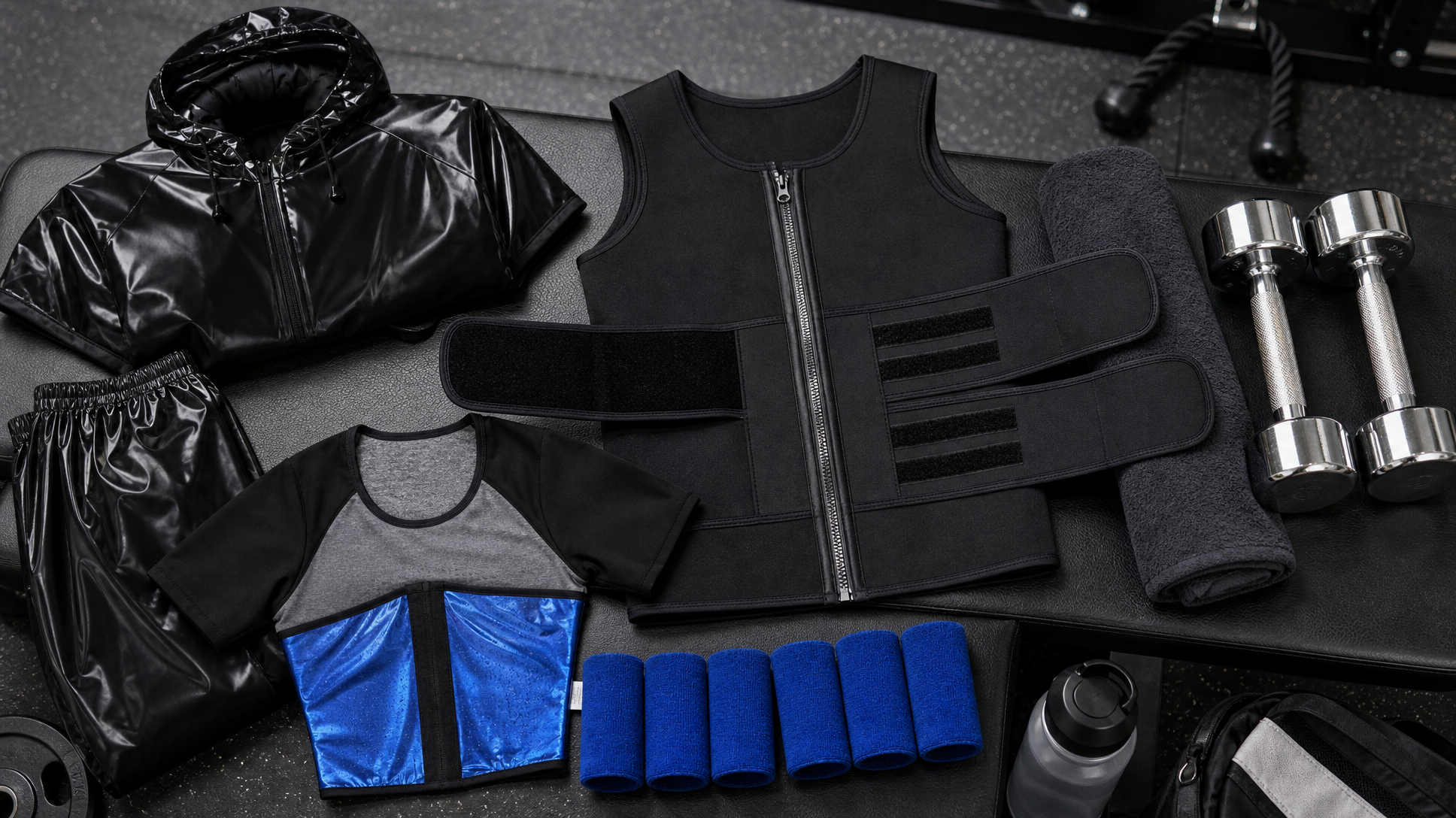
The Mulyeeh Weight Loss Sweat Suit Anti-Rip Heavy Duty Full-Zip Sauna Suit is the most aggressive option in this category. It's a two-piece set — a hooded zip-up jacket and matching pants — made from a glossy, waterproof-finish material that traps heat across your entire body from ankles to wrists. If you've ever seen someone run laps in what looks like a shiny black tracksuit, this is it.
This format makes the most sense when you want maximum sweat across the whole body during cardio-heavy sessions: outdoor runs, jump rope circuits, cycling, or long walks where you're moving continuously and your core temperature is already climbing. The hood adds coverage for your neck and head, and the full-length pants mean your legs are sweating too — something vests and shirts simply can't do.
The honest trade-off: a full suit is hot, fast. It's not comfortable for lifting, where you need to bend, squat, and move freely at the joints. It's also harder to regulate — you can't easily peel off the top if you overheat mid-session. Use it for steady-state cardio where you're moving at a consistent pace and can monitor how you feel throughout.
The Sauna Vest: Targeted Core Heat With Adjustable Compression
The A+ Choice Sauna Vest Waist Trainer For Men takes a different approach. It's a sleeveless neoprene vest with a front zipper and two adjustable velcro waist straps — so you can dial in the compression around your midsection without the fit being fixed. The arms stay free, which matters more than people realize when you're pressing, rowing, or doing any upper-body work.
This is the format built for the gym floor. Because your shoulders and arms are uncovered, you get full range of motion for lifts. The neoprene concentrates heat around your core and lower back — the zone most people are actually trying to work — while keeping your upper body cool enough to push through a real strength session. The double waist strap also adds a degree of lower back support during compound movements, which is a practical bonus beyond the sweat factor.
It's also the easiest format to layer. Wear it under a regular gym shirt and nobody knows it's there. Or wear it over a compression top for a more visible setup. Either way, it doesn't restrict the movements that matter in a weight-training context.
Where it falls short: if your goal involves heavy lower-body sweat or you're doing cardio where arm coverage would help, a vest leaves a lot of surface area uncovered. It's a focused tool, not a full-body one.
The Sauna Shirt: Arms-In, Chest-Forward Heat for Women's Training
The Dyuai Sauna Shirt For Women Sauna Short Sleeve Sauna Sweat Vest sits between the other two formats in terms of coverage. It has short sleeves — so your upper arms are included — and a heat-trapping front panel across the chest and torso. From the photo, the front panel is a vivid blue with a glossy, moisture-beaded finish, while the sleeves are a matte black stretch material. It closes at the front with a hook-and-eye closure, and you can see in the photo that the surface is already wet with sweat during use.
This format is designed for women who want core and upper-arm coverage without committing to a full suit. It works well for HIIT classes, circuit training, or any session where you're moving your arms dynamically — because the short sleeves move with you rather than restricting you the way a long-sleeve suit would. The cropped length also makes it easier to pair with high-waisted leggings without bunching.
The key difference from the vest: the sleeves. If your arms are a focus area or you simply want more surface coverage than a vest provides, this format fills that gap without going all the way to a full suit.
Don't Forget the Small Piece That Ties It Together
Whichever format you choose, your wrists become a sweat flashpoint during intense sessions. The Willbond 6 Inch Wristbands — a set of six terry-cloth sweatbands in a bold royal blue — are the kind of accessory that seems minor until you're mid-workout with sweat running down your forearms and into your grip. At six inches, they cover more of the wrist and lower forearm than a standard short band, which matters when you're wearing a sauna vest or shirt and your wrists are the most exposed part of your arm.
They're also practical for anyone doing sauna suit sessions outdoors — wiping your face during a run without breaking stride is a real quality-of-life improvement when you're already overheated.
If you're curious about training the wrist and forearm more specifically, this post on grip strength vs. wrist strength is worth a read alongside your sweat gear setup.
Which One Should You Actually Buy?
Here's the honest summary:
- You do mostly cardio outdoors or on a machine → Full sauna suit (Mulyeeh). Maximum coverage, maximum sweat, built for sustained movement.
- You lift weights or train at the gym → Sauna vest (A+ Choice). Free arms, adjustable compression, focused core heat without restricting your lifts.
- You do HIIT, circuits, or want arm coverage without a full suit → Sauna shirt (Dyuai). Short sleeves add upper-arm coverage while keeping you mobile.
- Any of the above → Add the Willbond wristbands. They're cheap, they work, and you'll use them every session.
The worst move is buying the most extreme-looking option and hoping it fits your routine. Match the format to how you actually train, and you'll actually use it.
Browse the full range of sweat gear and athletic apparel at OnlineSportsMall — 30-day returns, 100% authentic gear, and free US shipping on orders over $75. New customers can use code WELCOME5 for 5% off their first order.
Frequently Asked Questions
Can I wear a sauna suit or vest for weightlifting?
A full sauna suit is generally not ideal for lifting — the material restricts movement at the joints and gets extremely hot during heavy compound lifts. A sauna vest like the A+ Choice option is a much better fit for the gym floor, since the sleeveless design keeps your arms free for pressing, pulling, and squatting while still concentrating heat around your core.
Is it safe to work out in sweat-enhancing gear?
Sweat gear raises your core temperature and causes you to lose more fluid during exercise, so staying well-hydrated is essential. Start with shorter sessions to gauge how your body responds, take breaks if you feel dizzy or lightheaded, and avoid using sauna suits in already hot or humid outdoor conditions where overheating risk is higher. Always listen to your body.
Do sauna suits and vests actually help with fat loss?
Sweat gear increases perspiration during a workout, which causes temporary water-weight loss. That number on the scale after a session reflects fluid loss, not fat loss — it comes back once you rehydrate. The real benefit is that they can make your workouts feel more intense and help you stay warmer during warm-up phases. Long-term body composition changes still come down to consistent training and nutrition.
How do I clean a sauna suit or neoprene vest?
Most sauna suits and neoprene vests should be hand-washed or wiped down with a damp cloth rather than thrown in a machine wash, as machine washing can degrade the heat-trapping material over time. Always check the care label on the specific product. Let them air dry fully before storing to prevent odor buildup — don't fold them away while still damp.