

The pitch sounds great. The reality is more complicated.
Walk into any fitness retailer's website and you'll see it: bikes that stream live classes, dumbbells that track your reps, treadmills with touchscreens the size of a small TV. The marketing copy promises a transformation. The price tag promises you'll feel it. But what does any of this technology actually do — and does it make you fitter, or just more entertained while you sweat?
That's the question worth answering before you spend real money. Smart gym equipment isn't a scam, but it's also not a universal upgrade. Whether it's worth it depends almost entirely on who you are and how you actually train.
What "Smart" Actually Means in Gym Equipment
The word gets applied to everything from a $30 jump rope with a calorie counter to a $2,000 stationary bike with a live leaderboard. "Smart" is marketing shorthand for one or more of three things:
- Sensors that measure something — heart rate, power output, rep count, range of motion, cadence.
- Connectivity that sends that data somewhere — an app, a display, a cloud platform.
- Adaptive systems that respond to what the sensors find — automatically adjusting resistance, pacing cues, or workout recommendations.
Those three things are genuinely different in value. A sensor that measures your power output on a bike gives you real, actionable training data. A touchscreen that streams a cycling class is entertainment with a resistance knob attached. Both get called "smart." Only one of them changes how you train.
The Tech That Actually Moves the Needle
Power Meters and Output Tracking
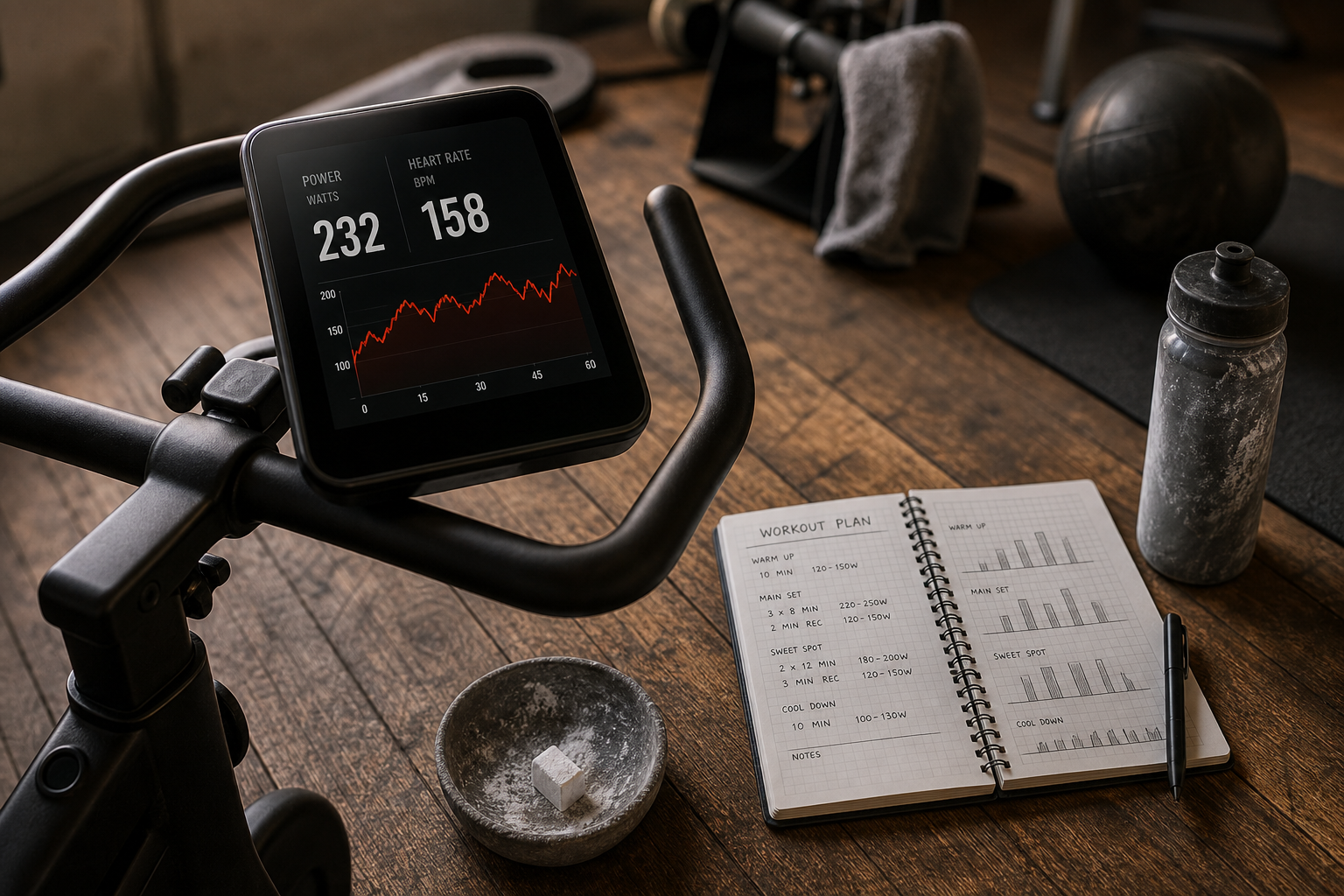
If you train with any kind of structured intensity — intervals, zone training, progressive overload — accurate output data is legitimately useful. A bike or rower that measures watts gives you an objective number that doesn't lie the way perceived effort does. You can't fake a 250-watt interval. You can absolutely convince yourself a moderate effort felt hard.
For cyclists, runners, and rowers who follow structured programs, this is the one piece of smart tech that directly improves training quality. It removes guesswork from intensity prescription.
Automatic Resistance Adjustment
Some connected bikes and smart trainers adjust resistance automatically based on a programmed workout or a virtual course. This matters if you're doing ERG-mode interval training — the machine holds a target wattage regardless of your cadence, so you focus on effort, not dialing a knob. For serious endurance athletes, that's a real training tool. For someone doing 30 minutes of casual cardio, it's a feature they'll never use.
Rep and Range-of-Motion Tracking in Smart Weights
Connected dumbbells and cable systems that count reps and flag partial range of motion sound impressive. In practice, the accuracy varies widely across products and movement types. The honest use case: beginners who genuinely don't know when they're cutting a rep short, or rehab-focused training where range of motion is the whole point. Experienced lifters already know when a rep was garbage. They don't need an app to tell them.
Heart Rate Integration
Most smart cardio equipment can sync with a chest strap or wrist-based monitor to keep your heart rate on-screen and log it over time. This is useful for zone-based cardio training and for tracking fitness trends over weeks. It's not revolutionary — a standalone heart rate monitor does the same job — but having it built in and logged automatically is a genuine convenience.
The Tech That's Mostly Just Entertainment
Touchscreen displays with streaming fitness classes are the biggest category here. They make cardio less boring, which is a real benefit if boredom is what keeps you off the machine. But the class content is the product, not the equipment — and you're often paying a monthly subscription on top of the hardware cost to access it.
Ask yourself: would you follow through on workouts without the screen? If yes, you're paying for something you don't need. If the honest answer is no — if accountability and engagement are what you actually struggle with — then the entertainment value is real and worth pricing in.
Leaderboards and social features follow the same logic. Some people are genuinely motivated by competing with strangers on a virtual list. Others find it completely irrelevant to why they exercise. Know which one you are before you factor it into a purchase decision.
Who Should Buy Smart Equipment (Honestly)
Smart gym equipment earns its price for a fairly specific set of buyers:
- Structured endurance athletes — cyclists, runners, and rowers who follow periodized training plans and need accurate power or pace data to execute workouts correctly.
- People who need accountability to show up — if a live class or a streak on an app is the difference between training and not training, that's a legitimate return on investment.
- Home gym builders replacing a gym membership — if the connected platform genuinely replaces the coaching and variety you'd get at a facility, the math can work out.
- Rehab and mobility-focused training — where precise range-of-motion feedback has therapeutic value.
Who Should Skip It and Buy Simpler
If you train consistently without needing external motivation, a non-connected piece of cardio equipment does the same cardiovascular work at a lower price point. A quality rower, a spin bike with a basic flywheel, or a set of adjustable dumbbells will build the same fitness. The data you'd get from the smart version won't change your outcome if you're already showing up and training hard.
The same goes for beginners who are still figuring out whether they'll stick with training at all. Starting with expensive connected equipment is a high-stakes bet. If you're not sure yet, start simpler — building a budget-friendly home gym with versatile basics is a smarter entry point than committing to a platform with an ongoing subscription.
The Subscription Question Nobody Asks Up Front
A lot of smart equipment is priced to get you in the door, with the real cost coming from the monthly content subscription. Before you buy, check: does the equipment still function meaningfully without the subscription? Some machines lock core features behind a paywall. Others work fine as standard equipment and the app is just a bonus. That distinction matters enormously for the total cost of ownership over two or three years.
Read the fine print on what's included at purchase versus what requires an ongoing fee. If the answer isn't clear on the product page, that's a signal worth paying attention to.
A Simple Framework for the Decision
Before buying any piece of connected fitness equipment, answer three questions:
- Will I use the data? If you follow a structured program where power, pace, or zone data changes how you train, yes. If you exercise by feel and don't plan to change that, probably not.
- Will the platform keep me consistent? Be honest. If accountability features genuinely move the needle for you, price them in. If you already train without them, they're a nice-to-have at best.
- What's the real total cost? Hardware plus subscription, over the period you'll realistically use it. Compare that to a simpler alternative and decide if the delta is worth it for your specific situation.
There's no universal right answer. But there is a right answer for you, and it starts with being clear-eyed about how you actually train — not how you plan to train once you have the new equipment.
If you've worked through those questions and you're ready to build out your setup, this guide to hybrid training gear covers how to combine cardio and strength equipment in a home setup that actually gets used.
Shop fitness and gym equipment at OnlineSportsMall — authentic gear from 500+ brands with free US shipping on orders over $75. Whether you want the full connected setup or a solid, no-frills alternative, it's all in one place.
Frequently Asked Questions
Do I need a subscription to use smart gym equipment?
It depends on the product. Some connected equipment functions fully as standard gear and the app is optional — others lock key features like structured workouts or performance tracking behind a monthly fee. Always check what's included at purchase and what requires an ongoing subscription before you buy. The total cost over a year or two can look very different once you factor in the platform fee.
Is smart gym equipment worth it for beginners?
Generally, no — not as a starting point. Beginners are still building the habit of training consistently, and expensive connected equipment is a high-stakes bet before you know what kind of training you'll stick with. Starting with versatile, simpler equipment and upgrading later once you know your preferences is usually the smarter move financially and practically.
What's the difference between a smart bike and a regular spin bike?
A smart bike typically includes a power meter, automatic or app-controlled resistance adjustment, and connectivity to a training platform or display. A standard spin bike has a manual resistance knob and no data output beyond what you feel. For structured interval training where accurate wattage matters, the smart version offers real training value. For general cardio, the mechanical difference in workout quality is minimal.
Can smart gym equipment replace a personal trainer?
It can replace some of what a trainer does — providing structured workouts, tracking progress, and cueing effort levels — but not all of it. A trainer watches your movement, corrects form in real time, and adjusts programming based on nuanced feedback. Connected equipment does none of that. It's a useful tool for self-directed athletes who already understand good form, not a substitute for hands-on coaching if you're still learning movement fundamentals.