

You search "floor mat for working out," scroll through a wall of options, and somehow end up more confused than when you started. Yoga mat, exercise mat, fitness mat, gym mat — the listings blur together, and the specs don't help. Thickness in millimeters, vague material names, stock photos of someone meditating on a beach.
Here's the thing: yoga mats and exercise mats are genuinely different tools, designed around different demands. Buying the wrong one isn't just annoying — it affects your grip, your joint comfort, and how well the mat holds up over time. Let's sort it out.
The Core Difference (And Why It Matters)
A yoga mat is built for grip and precision. Yoga involves sustained static holds, slow transitions, and a lot of barefoot contact with the surface. The mat needs to be thin enough that you can feel the floor beneath you for balance, and textured enough that your hands and feet don't slide during a downward dog or warrior pose. Most yoga mats are relatively thin — enough cushion to take the edge off a hard floor, but not so much that you're sinking into foam mid-pose.
An exercise mat — sometimes called a gym mat or fitness mat — is built for impact absorption and durability. Think floor workouts: burpees, mountain climbers, planks, ab circuits, HIIT, and anything where your knees, hips, or spine are making repeated contact with the ground. These mats tend to be thicker and denser, because the priority is protecting your joints, not maximizing tactile feedback.
Same rectangular shape. Completely different jobs.
The Four Specs That Actually Tell You What You're Buying
1. Thickness
Yoga mats typically run on the thinner side — enough to cushion kneeling poses without destabilizing balance-dependent movements. Exercise mats are noticeably thicker, prioritizing joint protection during high-rep floor work. If you're doing jumping exercises or spending a lot of time on your knees, you want the extra cushion. If you're doing yoga, too much foam underfoot will make balance poses frustrating.
2. Surface Texture
Yoga mats have a tacky, grippy surface — often a slightly raised pattern — specifically so your palms and feet lock in during poses. Exercise mats tend to have a smoother or lightly textured surface. You're not holding static barefoot poses on them; you're moving dynamically, so the surface doesn't need to be as aggressively grippy.
3. Material Density
Yoga mats are often made from natural rubber, PVC, or TPE — materials chosen for their grip properties and relatively firm feel underfoot. Exercise mats lean toward denser foam constructions that compress under load and spring back, absorbing impact rather than resisting it. Press your thumb into each: a yoga mat should feel firm and springy; an exercise mat should feel like it's absorbing the pressure.
4. Size and Portability
Yoga mats are designed to roll up tightly and go with you — to the studio, the park, a hotel room. Exercise mats are often larger, heavier, and less portable by design. They're meant to stay put in a home gym or training space.
Which One Do You Actually Need?
Get a yoga mat if: your workouts are primarily yoga, Pilates, stretching, or any practice where you're holding poses and need foot-to-surface grip. Also the right call if you're doing light bodyweight work and portability matters.
Get an exercise mat if: your floor sessions involve HIIT, circuit training, ab work, burpees, or anything with repeated impact on joints. Joint protection trumps grip precision here.
Get both if: you genuinely do both types of training. They serve different enough purposes that using an exercise mat for yoga (too soft, too slippery) or a yoga mat for HIIT (too thin, too small) will frustrate you within a week.
How Sweat Gear Fits Into Your Floor Work
One thing that often gets overlooked when setting up a home workout space: what you're wearing matters as much as what you're working out on. If you're doing sweat-focused training — HIIT, circuit work, anything designed to push your core temperature — the right gear can make those sessions more effective.
The A+ Choice Sauna Vest Waist Trainer For Men is a black neoprene-style vest with a front zip closure and two adjustable velcro waist straps that let you dial in compression around the midsection. It's designed to be worn during gym workouts and exercise sessions to increase perspiration around the core — the kind of piece you'd layer under a shirt or wear on its own during floor training.
For women doing the same kind of sweat-focused floor work, the Dyuai Sauna Shirt For Women takes a slightly different approach: a short-sleeve design with a blue heat-trapping front panel and black neoprene-style sleeves, targeting both the torso and the upper arms. The front panel has a visible zip closure, and the whole piece is built to trap heat during movement.
If you want full-body coverage, the Mulyeeh Weight Loss Sweat Suit is a full-zip hooded jacket and matching pants set in a glossy black finish — the kind of sweat suit you'd wear for a longer cardio or conditioning session. The material has a slick, heat-retaining outer surface, and the set includes both the hooded top and the elasticated pants.
And for the details: the Willbond 6 Inch Wristbands are thick, terry-cloth style sweatbands in a bold royal blue. A set of six, they're the kind of simple accessory that earns its keep during any high-sweat session — keeping your wrists dry when you're transitioning between floor exercises and equipment work.
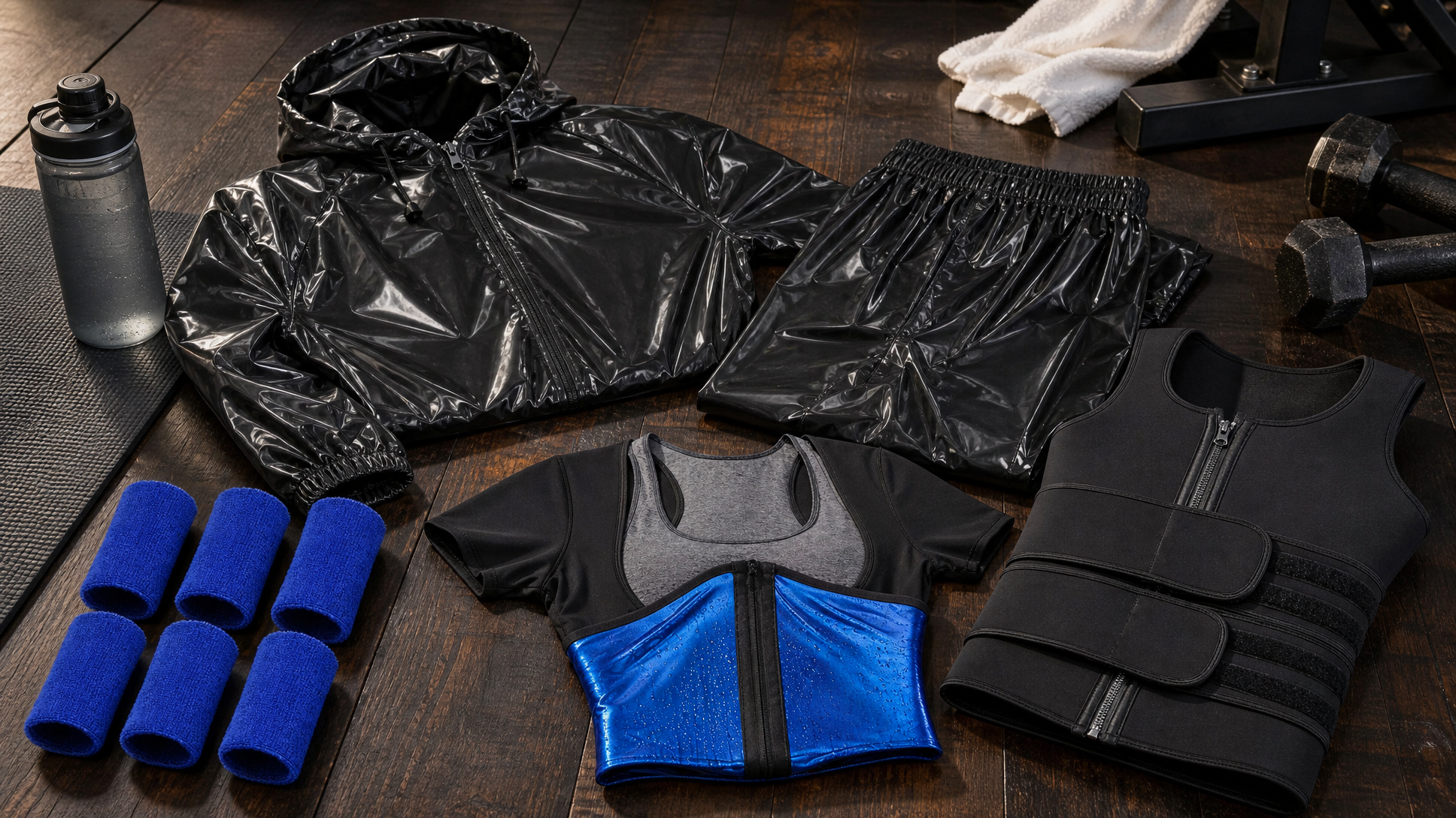
None of these replace a good mat — but if you're putting in serious floor time, having the right gear on your body and under it makes the whole session work better together. If you're already training in a sauna vest or sweat suit, you need a mat that can handle the moisture. Opt for a mat with a closed-cell surface that won't absorb sweat and become a hygiene problem over time.
If you want to go deeper on wrist health and grip during training, the post on grip strength vs. wrist strength is worth a read — it covers why wrist support during floor work matters more than most people realize.
The Bottom Line
The yoga mat vs. exercise mat debate isn't really a debate — they're tools for different jobs. Figure out what your floor sessions actually look like, then buy accordingly. A mat that's wrong for your workout isn't saving you money; it's just making every session slightly worse than it should be.
Browse fitness accessories and floor training gear at OnlineSportsMall's accessories collection — free shipping on orders over $75, and use code WELCOME5 for 5% off your first order.
Frequently Asked Questions
Can I use a yoga mat for HIIT or floor circuit training?
You can, but it's not ideal. Yoga mats are thinner and designed for grip during static poses, not for absorbing repeated impact on joints. If your HIIT sessions involve a lot of kneeling, jumping, or hip contact with the floor, a thicker exercise mat will protect your joints significantly better.
What thickness should I look for in an exercise mat?
It depends on the workout. For lighter bodyweight work and stretching, a thinner mat is fine. For high-impact floor work — burpees, mountain climbers, anything with repeated knee or hip contact — you want a noticeably thicker, denser mat. The key is density, not just thickness: a thick but soft foam mat will compress too much under load and lose its protective benefit quickly.
Do sweat suits and sauna vests work better with certain types of floor workouts?
Sweat-focused gear like sauna vests and sweat suits is best paired with continuous-movement sessions — HIIT, circuits, cardio — where your body temperature stays elevated throughout. They're less suited to slow yoga or Pilates sessions where you're holding static poses, since the heat buildup can become uncomfortable without the movement to manage it. Always stay well hydrated when training in heat-trapping gear.
Why do wristbands matter for floor workouts?
During high-sweat sessions, moisture on your wrists can affect your grip on equipment and make push-up or plank positions slippery. A thick terry-cloth sweatband like the Willbond 6 Inch Wristbands absorbs that moisture before it becomes a problem — a small detail that makes a real difference in longer sessions or when you're moving between floor work and weights.